
Remembering David Baltimore (1938–2025)
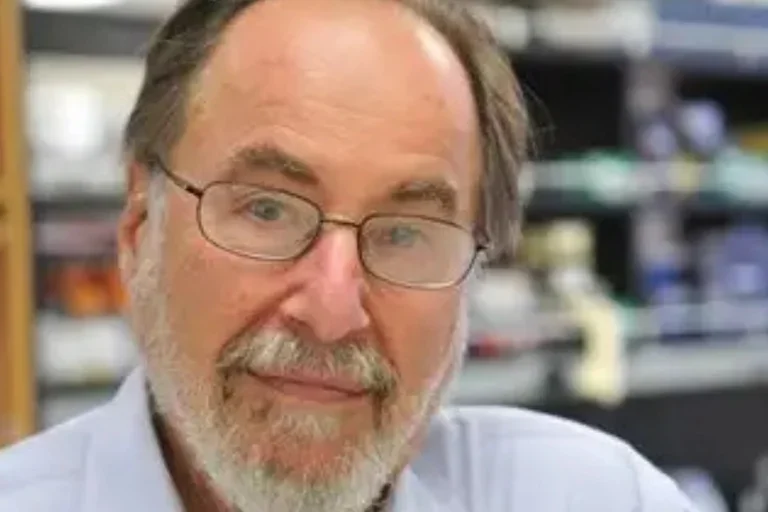
David Baltimore passed away on 6 September 2025, at the age of 87. He leaves behind a legacy that spans molecular biology, immunology, virology and scientific leadership. A Nobel laureate, institutional builder, fundraiser, and mentor to generations, David was both a pioneer of molecular mechanisms and a statesman of science.
In 1965, he launched his independent research laboratory at the Salk Institute, where his early work on animal viruses led to the discovery of the RNA-dependent DNA polymerase, or reverse transcriptase — a finding that reshaped molecular biology by overturning the prevailing ‘central dogma’ that genetic information flows only from DNA to RNA to protein1. A move to the US East Coast followed — to the Massachusetts Institute of Technology (MIT), the Rockefeller University and the Whitehead Institute, where his research continued to redefine virology, immunology, and cancer biology through foundational discoveries associated with the RAG genes, V(D)J rearrangement, NF-κB and the abl oncogene2. Three decades later, he returned westward as the seventh president of the California Institute of Technology (Caltech). While at Caltech, he championed collaborations that linked Caltech, The University of California, Los Angeles (UCLA), University of Southern California (USC) and the City of Hope (COH), envisioning a Los Angeles bio-hub for engineering immunity, connecting academic excellence with biotechnology innovation, translating discovery into therapy, and bringing science to patients. His westward journey thus became more than a return; it was a renewal of his lifelong belief that discovery thrives where curiosity, rigor and community converge.
His voyage west also brought him his life’s greatest partnership. When David began his independent career at the Salk Institute, he met Alice Huang — a brilliant young virologist whose intellect and warmth soon captured his heart. They married soon after, beginning a 56-year partnership of science, mutual respect and enduring love. Together, they journeyed from the Salk to MIT, Rockefeller, the Whitehead Institute, and finally back to Caltech — always side by side. Alice, herself an accomplished biologist and scientific leader, was David’s closest collaborator and steadfast companion; together they raised their daughter, TK, and cherished their granddaughter, Tesla.
When David arrived at Caltech in 1997 as its seventh — and first biologist — president, he brought a bold vision to elevate the life sciences at an institute that had historically been led by physicists and engineers. His presidency (1997–2006) strengthened Caltech’s position at the intersection of basic and biomedical sciences, elevated life sciences and biotechnology as core pillars of the institute’s future, and deepened regional clinical partnerships, integrating Caltech more fully into the broader southern California biomedical community.
Even as president, David remained deeply engaged at the bench. His Caltech laboratory became a hub for what he termed ‘engineering immunity’ — a vision to translate molecular immunology into therapeutic innovation, sparked by the thesis work of his PhD student L.Y. and rapidly expanded thereafter. In his 2019 autobiographical review ‘Sixty Years of Discovery’, he reflected on his shift towards immune regulation, microRNAs, splicing control and viral vectors for directing immunity2.
In what he termed the engineering immunity program, David led an ambitious effort uniting laboratories under a $13.9-million Grand Challenge in Global Health Award from the Bill & Melinda Gates Foundation. The project, aimed at developing immune-based therapies for HIV, brought together the research laboratories of David Baltimore and Pamela Bjorkman at Caltech and Pin Wang at USC. David later described this period to L.Y. as the moment when “engineering and immunology truly began to speak the same language.”
The success of the HIV program catalyzed a larger alliance, the Joint Center for Translational Medicine, supported by a Broad Foundation gift to promote cross-institutional group science in the greater Los Angeles area. At UCLA, this effort connected leading laboratories of O.N.W., A.R., James Economou, Caius Radu and Jerome Zack, and attracted Donald Kohn and Gay Crooks from the Children’s Hospital of Los Angeles. The consortium soon expanded to COH, incorporating teams led by Stephen Forman and Christine Brown, and later extended nationwide as members such as James Heath (now president of the Institute for Systems Biology in Seattle) and Yi Xing (now at the Children’s Hospital of Philadelphia) continued participating after relocating. It also nurtured a new generation of immunotherapy innovators.
Over the years, the Engineering Immunity (EI) Consortium of Los Angeles grew into a vibrant cross-campus family, meeting bi-monthly between Caltech and UCLA — often braving the notorious 405 and 110 freeways — before establishing its now-annual Lake Arrowhead retreat in 2015, which routinely attracts over 100 scientists every year (Supplementary Fig. 1). David and Alice attended faithfully through his final years. The most recent retreat, held just a week after his passing, became a heartfelt tribute — filled with memories, gratitude and renewed purpose to carry forward his vision of engineering immunity to engineer hope.
Among David’s greatest legacies is not a single discovery or institution, but a community — the constellation of people he trained, inspired and bound together through six decades of mentorship. Over his career, he directly trained 218 graduate students and postdoctoral fellows. The ‘Baltimore Clan’, as his trainees fondly call themselves, remains a close-knit family, united by the warmth and generosity that David and Alice so graciously cultivated around them (Supplementary Fig. 2).
Most beloved was the annual dim sum gathering around Lunar New Year, a tradition David and Alice carried from their Boston years to Pasadena. At renowned dim sum restaurants across Los Angeles, the Baltimore Clan filled tables with steaming dishes, laughter and stories. Even after his retirement in 2018, the gatherings continued bringing together academic and industry alumni. The last dim sum celebration in March 2025, just six months before his passing, embodied what these traditions represented: shared joy, mentorship and the enduring ‘Baltimore Bonding’.
Historically, the greater Los Angeles region was not regarded as a major bio-hub like Boston or the San Franscisco Bay Area, Yet during his Caltech years and beyond, David worked to weave together the region’s scientific, industrial and philanthropic threads. This activity moved beyond campus walls, as David advised local biopharmaceutical companies, notably serving on the board of directors for Amgen and Regulus, and co-founded several biotech start-ups, including Calimmune, Immune Design, PACT Pharma and Appia Bio.
David also championed broader ecosystem building. He strengthened Caltech’s Office of Technology Transfer & Corporate Partnerships, encouraged venture-capital networks in Pasadena and Los Angeles, and fostered collaborations with philanthropic research organizations such as the Bill & Melinda Gates Foundation, the Parker Institute for Cancer Immunotherapy and the Chan Zuckerberg Initiative. He was an early supporter of the California Institute for Immunology & Immunotherapy, newly established at the UCLA research park in west Los Angeles, recognizing its promise to anchor a new era of biomedical innovation across the region.
Through these interlocking efforts — academic, industrial and communal — David helped to plant the seeds of a bioscience ecosystem that continues to grow. His west-coast years became the catalyst for what is now emerging as a truly distinct Los Angeles bio-hub — his final voyage, and his gift to the region he called home.