
About
Molecular Sciences Building (MSB) 3801A
Research Interests & Bio
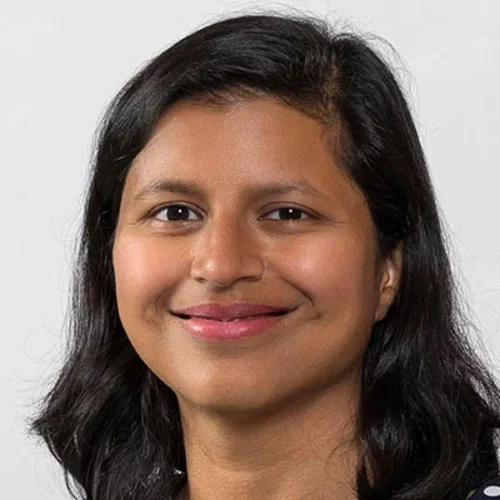
Dr. Tejas Bouklas is the inaugural Assistant Professor of Teaching in the Department of Microbiology, Immunology and Molecular Genetics at UCLA. She earned her Ph.D. in Microbiology and Immunology from the Albert Einstein College of Medicine and completed a postdoctoral fellowship in Infectious Diseases, Department of Medicine, at Stony Brook University.
Dr. Bouklas is a broadly trained microbiologist whose work focuses on host-pathogen interactions and innovative approaches to undergraduate science education. In MIMG, she teaches several courses, including Introductory Microbiology, Research Immersion/Advanced Research in Virology, Research Immersion/Advanced Research in Microbiology. She integrates authentic research experiences into the undergraduate curriculum, enabling students to engage in meaningful scientific discovery early in their academic careers. Through nationally recognized programs, such as HHMI Science Education Alliance’s Phage Hunters Advancing Genomics and Evolutionary Science (SEA-PHAGES), Tiny Earth, and CaleDNA, as well as new collaborations with the Goodman-Luskin Microbiome Center, her students conduct research in areas, including phage therapy, antimicrobial discovery, and microbiome science.
Dr. Bouklas has secured multiple grants to support these research-integrated learning initiatives. Under her mentorship, students have received competitive awards, presented their work at national conferences, and co-authored peer-reviewed scientific publications. She is an American Society for Microbiology Undergraduate Faculty Research Initiative Fellow and is deeply committed to expanding access to research opportunities while training the next generation of scientists in microbial and infectious disease biology.
Undergraduate research and science education publications
- Bouklas, T. et. al. 2026. Science communication tools: rubrics for generating posters and manuscripts that are authentic to the practice of science. J Microbiol Biol Educ. 0:e00313-25.
- Monti, D.L…Bouklas, T…Sivanathan, V. 2024. An inclusive Research and Education Community (iREC) model to facilitate undergraduate science education reform. Front. Educ. 9:1442318.
- Arthrobacter and Mycobacterium complete phage genomes. 2022-2023. Genbank. MiniBoss (OR434024), BlueHusk (OR475267), CallinAllBarbz (OR553891), JasmineDragon (PP978861), MissSwiss (PP978848), PinkFriday (PP978843), Soondubu (PP978807), GravityBall (PQ999099), IttyBittyPiggy (PV089520), JulietS (PV940998), RomansRevenge (PV915819), ShakeItOph (PV915865)
- Swede, M.J. and Bouklas, T. 2018. Integrating investigative research into the classroom: Foundational experiences for both science majors and pre-professional healthcare students. Journal of Allied Health. 47(4):300-307.
Replicative aging and fungal virulence (select publications)
- Stephenson, J.S., Garza, D.R., Bouklas, T. 2023. A fungus for our time: Candida auris emerges into the anthropocene. Current Tropical Medicine Reports 1-8.
- Bhattacharya, S., Bouklas, T., Fries, B.C. 2021. Replicative aging in pathogenic fungi. Journal of Fungi. 7(1), 6.
- Munshi, M.A., Gardin, J.M., Singh, A., Luberto, C., Rieger, R., Bouklas, T., Fries, B.C., Del Poeta, M. 2018. The role of ceramide synthases in the pathogenicity of Cryptococcus neoformans. Cell Reports 22(6):1392-1400.
- Bouklas, T., Alonso-Crisostomo, L., Szekely, T., Diago-Navarro, E., Orner, E.P., Smith. K., Munshi, M.A., Balazsi, G., Del Poeta, M., Fries, B.C. 2017. Generational distribution of a Candida glabrata population: Resilient old cells prevail, while younger cells dominate in the vulnerable host. PLoS Pathogens 13(5):e1006355.
- Bouklas, T., Jain, N., Fries, B.C. 2017. Modulation of replicative life span in Cryptococcus neoformans: implications for virulence. Frontiers in Microbiology 8:98.
- Bouklas, T.*, Diago-Navarro, E.*, Wang, X., Fenster, M., Fries, B.C. 2016. Characterization of the virulence of Cryptococcus neoformans in an insect model. Virulence. 6(8):809-813. (*equal contribution)
- Bouklas, T., Pechuan, X., Goldman, D.L., Edelman, B., Bergman, A., Fries, B.C. 2013. Old Cryptococcus neoformans cells contribute to virulence in chronic cryptococcosis. mBio. 4(4):e00455-13.